
If the lymphangioma is -small, cosmetically and functionally acceptable then observation and no treatment is required. Broomhead(1964) proposed 15% have spontaneous regression. Repeated aspiration To relieve from rapid growth
If the lymphangioma is -small, cosmetically and functionally acceptable then observation and no treatment is required. Broomhead(1964) proposed 15% have spontaneous regression. Repeated aspiration To relieve from rapid growth
As a rule the diagnosis is apparent and are made on clinical grounds Ultrasound scanning may help To make prenatal diagnosis and there are report of infants being treated ex-utero
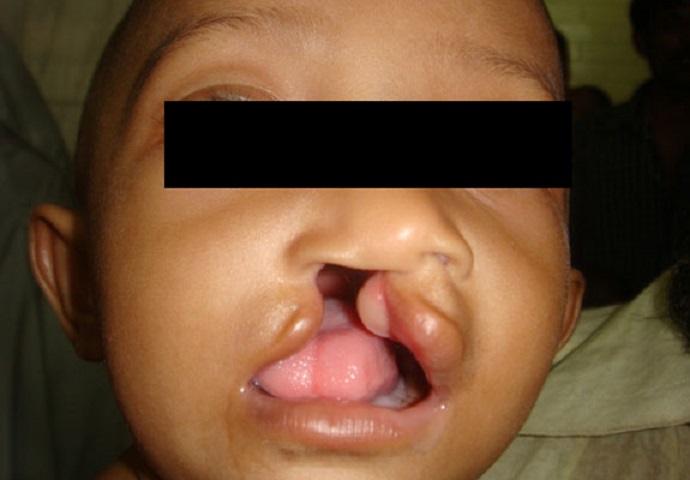
Craniofacial clefts.. Craniofacial dysostosis. Craniosynostosis. Encephalocele. Overgrowth, undergrowth or dysraphia associated with unilateral or bilateral orbital dystopia or displacement. Any other complex anomaly where specialist feel that the expertise present

The most commonly used clinical grading scale is the House Brackmann (HB) facial nerve grading system which has proposed a six point scale for reporting the result of surgery for

Tracheomalacia can be associated with a variety of congenital anomalies, including cardiovascular defects, developmental delay, esophageal anomalies, and GER. It can be caused by a diffuse process of congenital origin

Congenital causes: Longer-segment congenital tracheal stenosis is generally due to complete tracheal rings which are fused posteriorly and may be fused together to form a cartilage plate. (stove-pipe trachea or

DEFINITION: Laryngomalacia in the congenital disorder of the larynx characterized by partial/ complete collapse of the supraglottic structures on inspiration. It is the most common cause of congenital stridor. TYPES

At birth, the normal temporal bone has no mastoid process process and an incomplete tympanic ring. The ‘U’ shaped tympanic ring has nodular prominence on each arm, which separates the

The tympanic membrane is formed by the opposition of two epithelia provided by External Auditory Canal (EAC) and the middle ear cavity, with the fibrous layer between them. Embroyologically originates

The middle ear cleft consist of The tympanic cavity, The Eustachian tube and The mastoid air cell system. During early embryonic life in the mesenchyme surrounding the pharynx, five or